

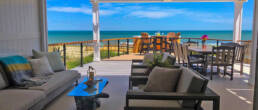
A retractable awning can turn a sun-baked patio into one of the most comfortable spots at home, and one of the first decisions you will make is how it opens and closes. Manual awnings use a hand crank, while motorized awnings extend and retract with a remote, a wall switch, or an app. Both deliver the same shade once they are out, but the day-to-day experience is quite different.
As the exclusive Sunesta dealer for Southwest Florida for more than 35 years, we help homeowners weigh this choice every week. In this guide, we compare motorized vs. manual retractable awnings on cost, convenience, size, and Florida weather so you can decide which option fits your patio and the way you use it.
How Motorized and Manual Retractable Awnings Work
Both types share the same basic design: a fabric cover rolls onto a tube inside a housing mounted to your home, and folding lateral arms push the fabric out to create shade. The difference is what turns the tube.
Manual Retractable Awnings
A manual awning uses a gear mechanism operated by a removable hand crank. You hook the crank into the gearbox and turn it to extend or retract the fabric. It is a simple, reliable setup with very few parts that can fail, and it needs no electrical connection.
Motorized Retractable Awnings
A motorized awning has a quiet tubular motor built inside the roller tube. With the press of a button, the awning extends or retracts on its own. Most motorized systems also include a manual override, so the awning can still be operated in the rare case of a power outage.
Can You Upgrade Later?
Homeowners often ask whether they can start with a manual awning and add a motor down the road. Depending on the model, a later conversion may be possible, but it typically involves replacing components and adding power after the fact. If you think you will want motorization eventually, it is usually simpler and more cost-effective to choose it from the start.
Controls and Sensors
Motorized awnings open the door to extra features. Options can include:
- Handheld remotes and wall switches
- Smartphone or home automation control
- Wind sensors that retract the awning automatically when gusts pick up
- Sun sensors that extend the awning when the patio starts to heat up
These features are where motorized systems separate themselves most clearly from manual ones, especially in a climate with sudden afternoon storms.
Comparing the Cost of Motorized and Manual Retractable Awnings
Manual awnings almost always have the lower upfront price. They skip the motor, the controls, and the electrical work needed to power the system, which makes them the most budget-friendly way to add retractable shade to a patio or deck.
Motorized awnings cost more for a few reasons. The motor itself adds to the price, and so do remotes, wall switches, and any smart controls. The awning also needs power, which usually means an outdoor outlet near the housing or a dedicated electrical connection. Sensors are typically an added option on top of the base motor package.
The gap between the two depends heavily on the size of the awning and the features you choose. On a smaller awning over a door or a modest patio, the difference may feel significant compared to the overall project. On a larger awning, the motor becomes a smaller share of the total cost, and the convenience it adds becomes much more noticeable because cranking a wide awning by hand takes real time and effort.
It is also worth thinking about cost over time. An awning that is easy to open and close tends to get used more and retracted more consistently when weather turns. Consistent retraction protects the fabric and frame, which can help the whole system last longer. Fabric selection affects price as well, and with more than 260 Sunesta fabric options available, you can choose a cover that fits your style regardless of which operating system you pick. You can explore those options on our retractable awnings page.
Ease of Use, Size, and Daily Life on a Florida Patio
Beyond price, the right choice usually comes down to how often you plan to use the awning and who will be operating it. Here is how the two compare in everyday life.
Where manual awnings shine:
- Smaller awnings that crank open in a minute or two without much effort.
- Locations where running power to the awning would be difficult or costly.
- Homeowners who use the awning occasionally rather than daily.
- Seasonal residences where the awning stays retracted for long periods.
Where motorized awnings shine:
- Wide or deep awnings that would take many turns of the crank to fully extend.
- Homeowners who want shade at a moment’s notice, several times a day.
- Anyone with limited mobility, shoulder issues, or who simply prefers not to crank.
- Households that want automatic retraction from a wind sensor when no one is home.
Size is often the deciding factor. On a large awning covering an entire patio, cranking by hand becomes a chore, and chores tend to get skipped. When the awning is hard to open, many people stop using it, which defeats the purpose of the investment. A motorized system removes that friction entirely. On the other hand, a modest awning over a small deck may only take a few easy turns, and in that case a manual crank is rarely a burden.
Your patio layout matters too. If the awning sits above a lanai already outfitted with motorized retractable patio screens, adding a motor to the awning lets you control your entire outdoor space with the same kind of push-button convenience.
Wind, Rain, and Florida Weather: Which Option Protects Your Awning Better?
In Florida, weather is part of the decision whether we like it or not. Afternoon thunderstorms can roll in quickly, and gusty winds are the biggest threat to any retractable awning. Retractable awnings are designed for shade, not for staying extended in high winds or heavy rain, so the key to a long life is retracting the awning when conditions change.
That is where motorized awnings with a wind sensor offer a real advantage. The sensor detects movement in the awning or rising wind and retracts the fabric automatically, even if you are at work, running errands, or out of town. With a manual awning, protection depends entirely on someone being home and remembering to crank it closed before the weather hits. For homeowners who travel frequently or spend part of the year away, that difference is significant.
Manual awnings can still perform very well in Florida as long as they are retracted consistently. Many homeowners make a simple habit of closing the awning every evening and whenever the forecast calls for storms. If you want to understand how much wind a retractable awning can safely handle, our guide on retractable awning wind ratings explains how those ratings work.
Whichever system you choose, retractable awnings should always be closed ahead of tropical storms and hurricanes. Regular care also helps either type stand up to salt air, humidity, and intense sun, and our retractable awning maintenance guide covers simple steps to keep the fabric, arms, and mechanism working smoothly.
Which Retractable Awning Is Right for Your Home in Sarasota, Bradenton, or Venice?
There is no single right answer for every patio, but most homeowners fall clearly into one camp once they think about how they will use the space.
Choose a Manual Awning If
Your awning is on the smaller side, you want the lowest upfront cost, power is hard to reach, or you plan to use the awning occasionally. A manual system is simple, dependable, and easy to live with when the span is manageable and someone is usually home to retract it when weather changes. It is also a practical choice for a secondary area, such as a small side patio or a spot over a window, where shade is needed now and then.
Choose a Motorized Awning If
Your awning is wide or deep, you want to use it daily, you value convenience, or you want automatic protection from wind. Motorized systems are also the better fit for second homes and for anyone who would rather not crank a large awning by hand.
For Restaurants and Businesses
On commercial patios, staff often open and close awnings several times a day as the sun moves. Motorized operation saves time and reduces wear from rushed cranking. Our commercial awnings and canopies team can help businesses choose the right setup for outdoor dining and seating areas.
Consider Your Whole Outdoor Space
Some homeowners decide a retractable awning is only part of the answer. If you want a permanent structure with adjustable shade overhead, our motorized louvered pergolas offer another way to control sun and rain.
We regularly install retractable awnings for homeowners in Sarasota, Bradenton, and Venice, and our salesperson can show you both systems during a free on-site consultation.
Motorized vs. Manual Retractable Awnings: A Quick Recap
If you are still weighing your options, here is a fast summary of the key differences to keep in mind:
- Upfront cost: Manual awnings cost less. Motorized awnings add a motor, controls, and power.
- Convenience: Motorized awnings open and close with a button. Manual awnings require cranking.
- Size: Manual works best on smaller awnings. Motorized is the better fit for wide or deep spans.
- Weather protection: Motorized awnings can retract automatically with a wind sensor. Manual awnings depend on someone being home.
- Simplicity: Manual systems have fewer components and need no electrical connection.
- Fabric choices: Both options are available with the full range of Sunesta fabrics.
Thinking through your patio size, how often you will use the awning, and how much you travel will usually point you clearly toward one option. If you are still undecided, seeing both systems operate side by side often settles the question quickly.
Get a Free Quote for a Retractable Awning in Sarasota
Seeing both systems in person is the easiest way to decide. During a free consultation, our salesperson will measure your space, walk you through manual and motorized options, and show you fabric samples, with no pressure at the end of the visit.
As a family-owned company working from our Sarasota shop, we measure, build, and install every awning with our own crews. When you are ready to find the right retractable awning for your patio, Get a Free Quote and we will help you choose the option that fits your home and the way you live.
Ready to Upgrade Your Outdoor Space?
Whether you’re adding shade to a backyard patio, a storefront, or a restaurant space, our team designs, engineers, and manufactures every awning in-house to hold up to Florida’s weather. Request a free quote today and we’ll help you find the right fit for your property.
Like this article? Spread the word!
Related Posts
September 14, 2026
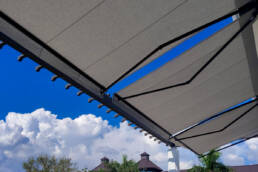
How Much Wind Can a Retractable Awning Handle?
Learn how wind ratings work for retractable awnings in Florida. Request a free quote from…
November 2, 2026
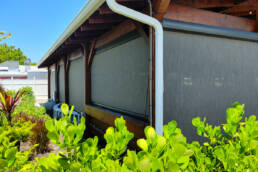
Motorized Retractable Screen Costs in Sarasota: A Guide by United States Awning
What do motorized retractable screens cost in Sarasota? Learn what drives pricing, from…
November 1, 2026
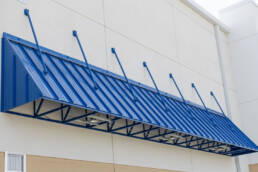
How Much Does a Metal Awning Cost in Florida?
How much does a metal awning cost in Florida? See what drives pricing, from size to…